Teaching reading to English language learners requires specialized approaches, focusing on unique challenges and leveraging effective strategies, as detailed in available reading instruction resources.
The Unique Challenges Faced by ELL Readers
English language learners encounter distinct hurdles in reading, extending beyond simply decoding words. These challenges encompass limited vocabulary, differing background knowledge, and unfamiliar cultural references within texts. Furthermore, variations in first language literacy skills significantly impact reading acquisition in English.
ELLs may struggle with complex sentence structures and idiomatic expressions, hindering comprehension. The cognitive load of simultaneously processing language and content creates additional difficulties. Effective instruction must acknowledge these obstacles and provide targeted support to bridge the gap between their existing skills and the demands of English reading materials, fostering confidence and progress.
The Importance of Culturally Responsive Pedagogy
Culturally responsive pedagogy is paramount when teaching reading to English language learners. Recognizing and valuing students’ cultural backgrounds enhances engagement and comprehension. Instruction should incorporate texts reflecting diverse perspectives and experiences, fostering a sense of belonging and relevance.
This approach moves beyond superficial inclusion, actively connecting reading content to students’ prior knowledge and lived realities. By acknowledging linguistic diversity and respecting cultural norms, educators create a supportive learning environment. Culturally relevant materials boost motivation and facilitate deeper understanding, ultimately improving reading outcomes for all ELLs.

Foundational Reading Skills for ELLs
Developing strong foundational skills – phonological awareness, phonics, and vocabulary – is crucial for English language learners’ reading success, building a solid base.
Phonological Awareness and Phonics Instruction
Effective phonological awareness instruction for English Language Learners (ELLs) necessitates explicit teaching of sounds within words, recognizing potential differences from their native language. This includes segmenting, blending, and manipulating sounds.
Simultaneously, systematic phonics instruction is vital, connecting sounds to letters and letter patterns. Teachers should provide ample opportunities for practice with decodable texts, allowing ELLs to apply phonics skills. Addressing common pronunciation challenges and providing targeted support are key components.
Careful consideration of students’ first language phonology can inform instructional decisions, ensuring a supportive and effective learning environment.
Vocabulary Development Strategies
Robust vocabulary knowledge is crucial for English Language Learners’ reading comprehension. Effective strategies include explicit vocabulary instruction, pre-teaching key terms before reading, and utilizing context clues.
Encouraging students to connect new words to prior knowledge and personal experiences enhances retention. Morphological analysis – exploring prefixes, suffixes, and root words – empowers ELLs to decode unfamiliar vocabulary.
Repeated exposure through varied activities, like word sorts and games, solidifies understanding. Leveraging authentic texts provides rich vocabulary in meaningful contexts, fostering both breadth and depth of knowledge.

Effective Reading Strategies for ELLs
Employing targeted reading strategies – pre-reading, during-reading, and post-reading – significantly improves comprehension for English language learners, as evidenced by research.
Pre-Reading Strategies: Activating Prior Knowledge
Before diving into a text, activating students’ prior knowledge is crucial for English language learners. This involves connecting the new material to their existing experiences and understanding. Techniques include brainstorming related topics, discussing relevant images, or pre-teaching key vocabulary.
Such activities build a framework for comprehension, making the text more accessible. Effective pre-reading also involves asking predictive questions, encouraging students to anticipate the content. This fosters engagement and prepares them to actively construct meaning while reading, ultimately improving their overall comprehension skills.
During-Reading Strategies: Monitoring Comprehension
As English language learners read, actively monitoring comprehension is vital. Strategies include encouraging students to pause and re-read confusing sections, or to paraphrase what they’ve read in their own words. Asking clarifying questions – “What does this mean?” or “How does this connect?” – promotes deeper understanding.
Note-taking, as a strategy, allows students to record key ideas and track their thinking. Teachers can model these techniques, demonstrating how proficient readers engage with text. Consistent monitoring helps ELLs identify and address comprehension breakdowns in real-time, fostering independent learning.
Post-Reading Strategies: Summarizing and Reflecting
Following reading, English language learners benefit from activities that solidify understanding. Summarizing, even briefly, requires students to identify main ideas and synthesize information. Reflective questions – “What surprised you?” or “How does this relate to your life?” – encourage critical thinking.
Utilizing note-taking from during-reading provides a foundation for summarizing. Teachers can model effective summaries and guide students in crafting their own. These post-reading strategies aren’t just about recall; they’re about building deeper comprehension and fostering a personal connection to the text.

Specific Instructional Approaches
Effective methods include shared and guided reading, fostering collaborative learning, and narrow reading, which enhances language acquisition through focused, repetitive text exposure.
Shared Reading and Guided Reading
Shared reading involves a teacher modeling fluent reading with engaging texts, promoting phonological awareness and comprehension for English language learners. This collaborative approach builds confidence and exposes students to rich language.
Guided reading, conversely, focuses on small group instruction with texts matched to students’ proficiency levels. Teachers provide support as students independently decode and comprehend, fostering strategic reading habits. Both methods are crucial for scaffolding ELL learners’ development, offering differentiated support and opportunities for practice, ultimately improving their overall reading skills.
The Role of Narrow Reading in Language Acquisition
Narrow reading, concentrating on texts within a specific subject area, proves highly efficient for second language acquisition for English language learners. This focused approach allows for repeated exposure to key vocabulary and grammatical structures, solidifying understanding.
By tackling related texts, ELL students build linguistic and content knowledge simultaneously, improving both fluency and comprehension. This strategy enhances their ability to infer meaning and tackle increasingly complex texts, fostering confidence and accelerating language development. It’s a valuable technique for targeted language growth.

Assessing Reading Comprehension in ELLs
Effective assessment utilizes formative techniques and note-taking to gauge ELL comprehension, providing valuable insights into their reading strategies and progress.
Formative Assessment Techniques
Employing formative assessment is crucial for monitoring ELL students’ reading comprehension dynamically. These techniques move beyond simple testing, offering ongoing feedback to both the learner and the instructor. Observing students during reading, asking clarifying questions, and utilizing think-aloud protocols reveal their thought processes and areas of difficulty.
Quick checks like exit tickets, summarizing activities, and paired discussions provide immediate insights. Regularly reviewing student note-taking – a valuable assessment tool – unveils comprehension levels and strategy application. These methods allow for timely adjustments to instruction, ensuring all learners are supported in their reading journey.
Utilizing Note-Taking for Assessment
Student note-taking serves as a powerful formative assessment tool when teaching reading to English language learners. Analyzing notes reveals comprehension levels, identifying areas where students struggle to synthesize information or connect ideas. Observing the types of notes – outlines, summaries, key words – indicates strategy use and understanding.
Providing structured note-taking templates can support ELL students, guiding their focus and organization. Assessing notes isn’t about perfect grammar, but about evidence of understanding. This method, as highlighted in reading resources, offers valuable insights into a student’s cognitive processes during reading.

Resources and Materials for ELL Reading Instruction
Leveraging authentic texts and readily available PDF resources is crucial for effective reading instruction for English language learners, supporting diverse learning needs.
Leveraging Authentic Texts
Utilizing authentic texts – materials created for native speakers, rather than specifically for language learners – offers significant benefits in teaching reading to English language learners. These resources expose students to real-world language use, enhancing comprehension and vocabulary acquisition.
Finding appropriate PDF documents, articles, and excerpts online provides accessible and cost-effective authentic materials. Selecting texts relevant to students’ interests and cultural backgrounds increases engagement.
Authentic texts promote linguistic and cultural understanding, fostering a deeper connection to the language. Teachers should scaffold access by pre-teaching vocabulary and providing support during and after reading, ensuring comprehension for all proficiency levels.
Finding and Utilizing Relevant PDFs
Locating suitable PDF resources is crucial for effective teaching reading to English language learners; Online searches using keywords like “ESL reading strategies,” “ELL reading comprehension,” and “teaching reading to English learners pdf” yield valuable materials. Educational websites and publishers often offer free downloadable resources.
When selecting PDFs, consider the text’s readability level, topic relevance, and cultural appropriateness. Utilize texts that align with students’ interests to boost engagement.
Effective utilization involves pre-reading activities, guided practice, and post-reading comprehension checks. Adapt materials as needed to meet diverse learning needs.

Addressing Different Proficiency Levels
Differentiated instruction is key; utilize varied PDF texts and strategies to support both beginning and advanced English language learners in their reading journey.
Differentiated Instruction for Beginning ELLs
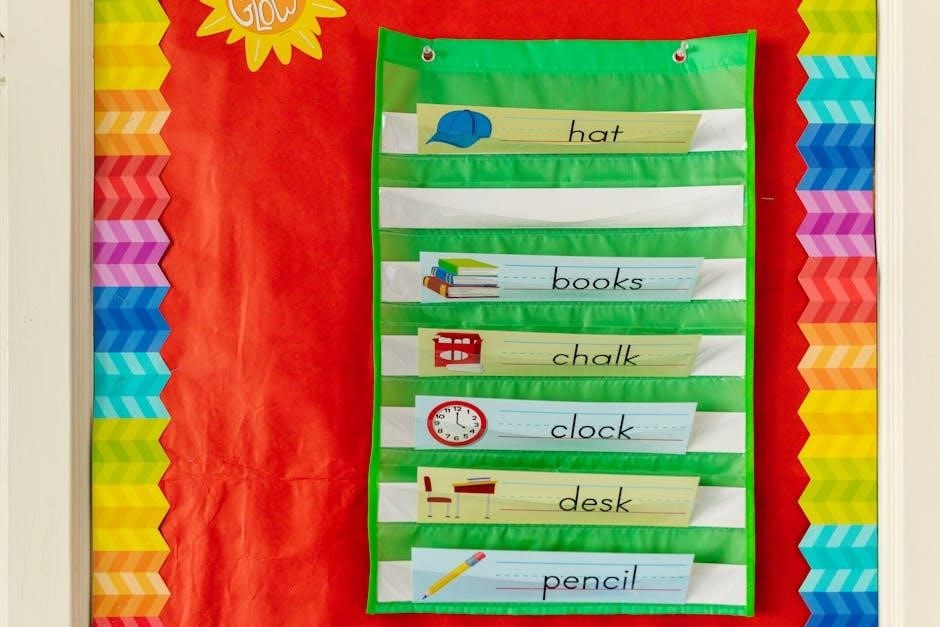
Teaching reading to beginning English Language Learners necessitates a highly scaffolded approach. Utilize simplified PDF texts with visual supports, focusing on foundational skills like phonological awareness and basic sight words. Pre-reading activities should heavily emphasize activating prior knowledge through images and realia;
Instruction should be multi-sensory, incorporating tactile and kinesthetic elements. Frequent checks for understanding are crucial, employing techniques beyond traditional questioning. Provide sentence frames and graphic organizers to support comprehension and production. Remember to prioritize building vocabulary in context, and consistently revisit previously taught concepts.
Supporting Advanced ELLs in Reading
For advanced English Language Learners, shift focus towards complex texts and nuanced comprehension. Utilize authentic PDF materials – articles, short stories – to foster academic language development. Encourage critical thinking through discussion and analysis, prompting students to evaluate author’s purpose and identify literary devices.
Implement strategies like close reading and text-dependent questions. Support vocabulary expansion through morphology study and contextual inference. Facilitate independent reading with choice boards and book clubs. Challenge them with writing tasks that require synthesizing information and expressing sophisticated ideas, building upon their existing linguistic abilities.

The Connection Between Reading and Writing
Integrating reading and writing activities enhances language acquisition for English language learners, fostering comprehension and expression, as supported by PDF resources.
Integrating Reading and Writing Activities
Combining reading and writing is crucial for English language learners’ development. Activities like summarizing texts, responding to reading prompts in writing, and journaling about personal connections to stories significantly boost comprehension. Utilizing PDF resources provides structured lesson plans for these integrated approaches.
Furthermore, encouraging students to rewrite stories from different perspectives or create alternative endings strengthens both their reading analysis and writing skills. These exercises, often found within comprehensive teaching materials, help solidify vocabulary and grammatical structures encountered during reading, leading to more confident and fluent language use.
Current Research in ELL Reading Instruction
Fitzgerald’s (1995) research indicates ELL readers’ reading comprehension strategies increasingly resemble those of proficient L1 readers, as explored in teaching PDF guides.
Fitzgerald’s Findings on Reading Strategies
Fitzgerald’s 1995 research provides valuable insights into how English Language Learners (ELLs) utilize reading comprehension strategies within academic contexts. Her findings demonstrate a notable shift over time; as ELLs progress, their approaches to tackling texts become increasingly similar to those employed by proficient first language (L1) readers.
This convergence suggests that effective reading instruction for ELLs should focus on explicitly teaching and modeling the same strategies used by successful L1 readers. Resources, including teaching PDFs, often emphasize this alignment. Understanding this developmental pattern is crucial for educators aiming to support ELLs’ academic reading success.
The ultimate goal isn’t simply teaching individual reading strategies, but fostering comprehensive comprehension skills for English language learners, as outlined in teaching PDFs.
The Ultimate Goal of Reading Instruction
Ultimately, effective reading instruction for English language learners transcends merely imparting individual strategies. The core objective centers on cultivating robust comprehension abilities, enabling students to actively engage with texts and extract meaningful insights. Resources, like those found in teaching PDFs, emphasize that successful reading isn’t about isolated skills, but a holistic process.
It’s about empowering ELLs to become independent, critical thinkers who can navigate diverse texts with confidence. This involves fostering linguistic development alongside cognitive skills, ensuring they can transfer reading comprehension to various academic disciplines and real-world scenarios. The focus shifts from decoding to understanding, analysis, and application.