Button Battery Size Guide: A Comprehensive Overview (Updated 02/11/2026)
This guide meticulously details button cell (coin) battery replacements, offering cross-reference charts for brands like Renata and Efest, alongside size selectors for diverse devices.
Explore comprehensive databases for smartphones, tablets, and watches, pinpointing equivalent battery sizes – from AG series to CR types – ensuring optimal performance.
Button batteries, also known as coin cells, represent a compact power solution integral to a vast array of portable devices. Their diminutive size and consistent power output make them ideal for applications where space is limited, and reliable energy is crucial. These batteries are ubiquitous, powering everything from watches and hearing aids to key fobs and small electronic toys.
Understanding the nuances of button batteries is essential, given the diverse range of sizes and chemistries available. This guide aims to demystify the world of these power cells, providing a comprehensive overview of their types, naming conventions, and applications. We will explore how to navigate cross-reference charts to find suitable replacements, ensuring your devices continue to function optimally. The selection process involves considering voltage, capacity, and the specific requirements of the device being powered.
Proper handling and disposal are also paramount, given the potential hazards associated with these batteries, particularly regarding swallowing risks. This introduction sets the stage for a detailed exploration of button battery technology and practical guidance for consumers and professionals alike.
What are Button Batteries?
Button batteries are small, cylindrical, and resemble buttons – hence their name. Technically termed “coin cells,” they are sealed power sources characterized by their compact form factor. These batteries typically range from 5 to 25 millimeters in diameter and 1 to 6 millimeters in thickness, making them exceptionally versatile for miniaturized electronics.
They utilize two primary chemistries: alkaline and lithium. Alkaline button batteries (like AG series) are cost-effective for low-drain devices, while lithium batteries (CR series) offer higher voltage, longer shelf life, and superior performance in demanding applications. The battery’s casing is usually made of stainless steel, protecting the internal components and preventing leakage.
Their construction allows for a high energy density within a small volume. This makes them perfect for devices needing a consistent, reliable power source in a limited space. Common types include silver oxide, lithium-manganese dioxide, and zinc-air, each offering unique characteristics suited to specific device needs.
Common Applications of Button Batteries
Button batteries power a surprisingly wide array of everyday devices; Their small size and reliable energy output make them ideal for applications where space is limited; Watches are perhaps the most recognizable application, relying on sizes like CR1220 and CR1216 for accurate timekeeping.
Beyond timepieces, they are crucial in hearing aids, medical devices (like thermometers and glucose meters), key fobs, remote controls, and small toys. Dollhouses frequently utilize button batteries for integrated lighting, as evidenced by models needing lithium batteries for illumination.
Furthermore, they are found in calculators, memory backup systems for computers, and various electronic gadgets. The convenience of easy replacement and long shelf life contributes to their widespread use. Even specialized equipment, such as certain LED lights and miniature sensors, depend on the consistent power provided by these compact energy cells.
Understanding Button Battery Naming Conventions
Decoding battery codes—AG, LR, SR, and CR—is essential for selecting the correct replacement. These designations reveal crucial information about battery chemistry and voltage.
Decoding Battery Codes: AG, LR, SR, CR
Button battery naming can seem complex, but understanding the codes unlocks accurate replacements. “AG” designates alkaline batteries, offering a cost-effective solution for low-drain devices. Conversely, “LR” signifies alkaline manganese dioxide batteries, providing enhanced performance and longevity. “SR” denotes silver oxide batteries, known for their stable voltage and extended shelf life, ideal for watches and hearing aids.
The “CR” prefix indicates lithium batteries, boasting the highest energy density and widest operating temperature range. These are frequently found in memory backup and high-drain applications. Within each code, numbers represent the battery size and capacity; for example, a higher number generally indicates a larger battery. Recognizing these prefixes and numerical values is vital for cross-referencing and ensuring compatibility when replacing batteries in various devices, as detailed in comprehensive battery charts.
Furthermore, understanding these codes allows consumers to select batteries optimized for specific device needs, maximizing performance and lifespan.
Voltage and Capacity Explained
Voltage, measured in volts (V), represents the electrical potential difference driving current through a circuit. Most button cells deliver 1.5V (alkaline) or 3V (lithium/silver oxide), crucial for device compatibility. Using an incorrect voltage can damage sensitive electronics. Capacity, measured in milliampere-hours (mAh), indicates the amount of electrical charge a battery can store, influencing runtime.
Higher mAh values translate to longer operating times. Lithium batteries generally offer higher capacity than alkaline counterparts for a given size. Understanding both voltage and capacity is paramount when selecting a replacement. A battery with the correct voltage but insufficient capacity may power the device, but with a significantly reduced lifespan.
Cross-reference charts often list both specifications, aiding in finding equivalent replacements. Prioritizing both parameters ensures optimal device performance and longevity, preventing malfunctions and maximizing usability.
The Role of Lithium in Button Battery Technology
Lithium plays a pivotal role in modern button battery technology, offering significant advantages over traditional alkaline or silver oxide chemistries. Lithium batteries boast a higher energy density, meaning they store more power for their size and weight, extending device runtime. CR series batteries, utilizing lithium, are prevalent due to this efficiency.
Furthermore, lithium exhibits a stable voltage output throughout its discharge cycle, ensuring consistent performance. This contrasts with alkaline batteries, where voltage gradually declines. Lithium’s low self-discharge rate also means these batteries retain their charge for longer periods when not in use.
However, lithium batteries require careful handling and disposal due to their reactivity. They are commonly found in applications demanding reliable, long-lasting power, like watches, medical devices, and key fobs.

Popular Button Battery Sizes & Equivalents
Common sizes like CR2032, CR2025, CR1220, and AG3 are frequently used, with cross-reference charts aiding replacements for various devices and brands.
CR2032: The Most Common Size
The CR2032 is arguably the most prevalent button cell battery, widely utilized across a vast spectrum of applications due to its reliable power output and readily available nature. Its designation breaks down as follows: ‘CR’ indicates a lithium manganese dioxide chemistry, ’20’ denotes the diameter in millimeters (20mm), and ’32’ signifies the thickness in millimeters (3.2mm).

You’ll find CR2032 batteries powering everything from car key fobs and electronic calculators to fitness trackers, medical devices like hearing aids, and even Christmas cards with integrated lights. Its 3V output and relatively high energy capacity make it suitable for devices requiring consistent, moderate power.
Finding a replacement for a CR2032 is generally straightforward, as it’s a standardized size. However, understanding equivalent options is crucial. While direct replacements are ideal, sometimes alternatives like CR2025 (slightly thinner) might be usable depending on the device’s battery compartment tolerances. Always verify compatibility before substituting.
CR2025: A Slightly Thinner Alternative
The CR2025 button cell battery presents a compelling alternative to the CR2032, primarily differing in thickness. Like its counterpart, ‘CR’ signifies lithium manganese dioxide chemistry, ‘20’ represents the 20mm diameter, but ‘25’ indicates a 2.5mm thickness – a noticeable reduction of 0.7mm. This seemingly small difference can be critical for devices with constrained battery compartments.
While offering slightly less energy capacity than the CR2032 due to its reduced volume, the CR2025 maintains the same 3V output, making it suitable for many of the same applications, including watches, small electronics, and key fobs. It’s often found in devices where minimizing profile is paramount.
Compatibility isn’t always guaranteed; a CR2025 can sometimes substitute a CR2032 if the device allows for the slight thickness difference, ensuring good contact. However, always consult the device’s manual or battery compartment specifications before making a substitution to avoid potential issues.
CR1220 & CR1216: Sizes for Watches & Small Devices
CR1220 and CR1216 batteries are popular choices for powering watches and other miniature electronic devices. Both utilize lithium manganese dioxide chemistry, delivering a stable 3V output. The ‘CR’ denotes this chemistry, while ‘12’ signifies the 12mm diameter. The key distinction lies in their thickness: CR1220 measures 2.0mm thick, and CR1216 is slightly thinner at 1.6mm.
This subtle difference in height is crucial for compatibility within the tight confines of watch cases and small gadgets. CR1216 batteries are frequently used in Japanese quartz watches, while CR1220 finds application in various European and American watch models.
Cross-referencing charts are essential when replacing these batteries, as multiple watch models may accept either size. Ensuring a snug fit and proper contact is vital for reliable operation. Always verify the original battery specification before making a replacement to guarantee optimal performance.
AG3, AG4, AG5: Alkaline Button Battery Series
AG3, AG4, and AG5 represent a series of alkaline button cell batteries commonly used in small, low-drain devices like toys, calculators, and remote controls. “AG” signifies an alkaline battery, offering a cost-effective power solution compared to lithium counterparts. These batteries typically deliver a voltage of 1.5V.
The numbers (3, 4, and 5) denote the battery’s size, with AG3 being the smallest at 7.6mm diameter and 2.6mm thickness, AG4 measuring 8.3mm diameter and 3.1mm thickness, and AG5 being 9.5mm diameter and 3.4mm thickness.
It’s crucial to note that AG batteries often have silver oxide equivalents (SR series). When replacing, consult a cross-reference chart to ensure compatibility. While AG batteries are cheaper, silver oxide batteries generally offer a longer shelf life and more stable voltage output.
LR44 & SR44: Silver Oxide Equivalents
LR44 and SR44 are popular silver oxide button cells, frequently used as replacements for AG4 alkaline batteries. Both share the same physical dimensions – 8.3mm diameter and 3.1mm thickness – making them directly interchangeable in many devices. However, significant performance differences exist.
LR44 batteries utilize silver oxide chemistry, providing a stable 1.5V output and a longer shelf life compared to alkaline AG4s. SR44 batteries are also silver oxide, but often denote a higher quality or specific brand variant. Silver oxide batteries excel in low-drain applications like watches and calculators.
While AG4 batteries are more affordable, LR44/SR44 offer superior reliability and consistent power delivery. When replacing, always verify the device’s voltage requirements. Using the correct battery ensures optimal performance and prolongs the lifespan of your electronic devices.
Button Battery Cross-Reference Charts
These charts simplify finding equivalent replacements, listing major brands like Renata, and providing comprehensive tables for watches, smartphones, and various device sizes.
Finding Equivalent Battery Replacements
Locating suitable replacements for button batteries can be surprisingly complex, given the variety of naming conventions and equivalent options available. Fortunately, comprehensive cross-reference charts are readily accessible, designed to streamline this process. These charts meticulously map different battery codes – such as AG, LR, SR, and CR – to their functional equivalents, regardless of the manufacturer.
For instance, understanding that an AG3 battery has a silver oxide counterpart (like an SR41) is crucial for ensuring compatibility. Similarly, charts detail how CR1220 batteries can often be substituted for CR1216 in certain applications, though slight capacity differences may exist. Utilizing these resources prevents incorrect battery installations and potential device malfunctions.
Furthermore, specialized databases cater to specific device types, like watches and smartphones, offering precise size and voltage matching. These databases allow users to input their device’s battery dimensions, instantly revealing compatible replacements. Always prioritize accurate matching to guarantee optimal performance and longevity of your devices.
Watch Battery Cross-Reference Guide
Navigating the world of watch batteries requires a dedicated cross-reference guide due to the multitude of brands and corresponding battery numbers. A comprehensive table is essential for identifying equivalent replacements for popular watch battery sizes. For example, the Renata 344 is frequently used in Swatch, Fossil, Timex, and Casio watches, often interchangeable with other 344-series batteries.
Crucially, understanding that different manufacturers use unique codes for the same battery chemistry is vital. A watch requiring a specific silver oxide battery (like SR626SW) may have equivalent options from various brands, each with a distinct model number. These guides consolidate this information, simplifying the selection process.
Moreover, the guide should detail voltage and capacity specifications, ensuring the replacement battery meets the watch’s requirements. Accurate matching prevents damage and ensures reliable timekeeping. Utilizing a detailed chart, or an online database, is the most effective method for finding the correct watch battery replacement.
Smartphone & Device Battery Size Databases
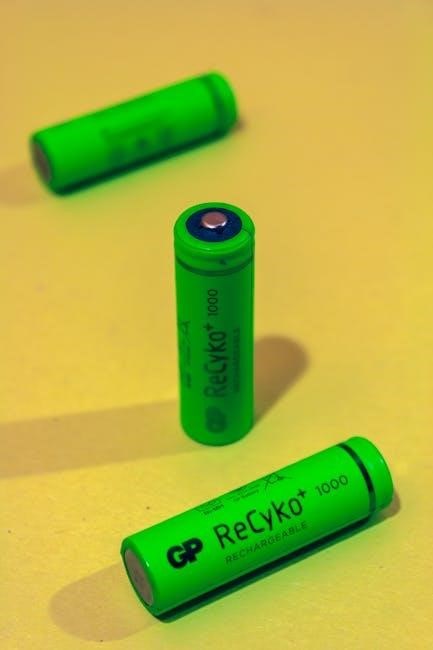
Locating the correct button cell battery for smartphones and other devices often necessitates utilizing specialized online databases. These resources move beyond standard size designations, focusing on the physical dimensions of the battery compartment. This is particularly important as manufacturers don’t always adhere to universal naming conventions.
These databases allow users to input the overall dimensions – length, width, and thickness – of the existing battery or the battery compartment itself. The system then filters and presents a list of compatible batteries, regardless of brand or model number. This approach is invaluable when dealing with less common devices or when the original battery’s markings are illegible.
Furthermore, comprehensive databases categorize batteries by type (lithium, alkaline, silver oxide) and voltage, ensuring a precise match. They often include detailed specifications and cross-reference information, streamlining the replacement process and minimizing the risk of incompatibility.
Safety Considerations When Using Button Batteries
Prioritize safety: button batteries pose swallowing hazards, requiring immediate first aid. Proper storage and responsible disposal are crucial, alongside selecting the correct battery.
Swallowing Hazards & First Aid
Button batteries present a significant, potentially life-threatening hazard if swallowed, especially by young children. Their small, smooth size makes them easily mistaken for candy. If ingestion occurs, immediate medical attention is paramount – do not induce vomiting.
These batteries can cause severe internal burns within minutes due to the electrical current they produce when lodged in the esophagus. The battery’s size can also create a blockage. Symptoms may include choking, drooling, refusing to eat, chest pain, or coughing.
First aid involves contacting your local poison control center or emergency services (911 in the US) immediately. Follow their instructions precisely. Do not attempt to remove the battery yourself. Medical professionals will likely use endoscopy to safely retrieve the battery and assess any damage. Time is of the essence to minimize potential harm. Prevention through secure battery compartments and diligent supervision is key.
Proper Battery Storage & Disposal
Button batteries, while small, require careful storage and disposal to prevent hazards. When not in use, store batteries in a cool, dry place, away from direct sunlight and extreme temperatures. Keep them out of reach of children and pets, ideally in a locked cabinet or container. Avoid storing batteries loose together; this can cause short circuits and potential fire risks.

Disposal of button batteries should never occur in regular household trash. They contain materials harmful to the environment, including heavy metals like mercury, lead, and cadmium. Instead, utilize designated battery recycling programs. Many retailers, such as hardware stores and electronics shops, offer battery recycling services.
Check with your local waste management authority for specific guidelines on battery recycling in your area. Proper disposal ensures environmental protection and responsible resource management. Consider using battery organizers to safely store and transport batteries for recycling.
Choosing the Right Battery for Your Device
Selecting the correct button battery is crucial for optimal device performance and longevity. Always consult your device’s manual or battery compartment for the specified battery size and type. Utilizing cross-reference charts, readily available online and in battery retailers, can help identify equivalent replacements if the original is unavailable.
Consider voltage and capacity; matching these specifications ensures compatibility. While a slightly higher capacity might offer extended runtime, exceeding the device’s voltage limit can cause damage. Prioritize the correct battery chemistry – alkaline (AG), silver oxide (SR), or lithium (CR) – as substitutions can impact functionality.
For watches, precise sizing is paramount. Databases detailing watch battery equivalents are invaluable. When in doubt, seek assistance from a qualified technician or battery specialist to avoid damaging your device. Incorrect battery installation can void warranties and lead to malfunctions.