Evaporative Cooler Size Guide: A Comprehensive Overview
Navigating evaporative cooler sizing requires understanding BTU needs based on square footage, climate, insulation, and occupants. Charts and calculations ensure optimal cooling performance.
Understanding Evaporative Cooling Basics
Evaporative cooling, also known as swamp cooling, leverages the principle of water evaporation to reduce air temperature. Unlike traditional air conditioning, it doesn’t use refrigerants. Instead, warm, dry air is drawn through a moistened pad, causing water to evaporate and cool the air. This cooled, humidified air is then circulated throughout the space.
The effectiveness of this process is heavily reliant on humidity levels; drier climates yield better results. Understanding this fundamental difference is crucial when determining the appropriate size of an evaporative cooler for a specific environment. Proper sizing ensures efficient and comfortable cooling without excessive energy consumption.
How Evaporative Coolers Differ from Air Conditioners
Air conditioners utilize refrigeration cycles to actively remove heat and humidity from the air, making them effective in all climates. Conversely, evaporative coolers cool air through water evaporation, adding moisture. This makes them significantly more efficient in dry climates where the increased humidity is beneficial, but less effective in humid regions.
Air conditioners generally require sealed environments, while evaporative coolers need fresh air intake for optimal performance. Furthermore, evaporative coolers typically consume less energy than air conditioners of comparable cooling capacity. Choosing between the two depends heavily on your climate, budget, and desired level of humidity control.
Key Factors Influencing Evaporative Cooler Size
Determining the correct evaporative cooler size isn’t simply about square footage. Several crucial factors impact cooling capacity needs. Climate is paramount – dry climates demand less BTU output than humid ones. Insulation quality significantly affects heat gain; poorly insulated spaces require larger coolers. Window size and sunlight exposure also contribute, with more sun needing greater cooling power.

The number of occupants adds to the heat load, as does the presence of heat-generating appliances and lighting. Proper sizing considers these variables to avoid undersizing (insufficient cooling) or oversizing (inefficiency and potential moisture issues). Accurate assessment of these factors is vital for optimal performance.
Square Footage Calculation for Cooler Sizing
A foundational step in sizing an evaporative cooler is calculating the area you need to cool. Measure the length and width of the space in feet, then multiply these dimensions to determine the square footage. This provides a baseline for BTU requirements, though it’s rarely the sole determining factor.
Generally, a starting point is around 20-25 BTU per square foot, but this is a broad estimate. Charts correlating square footage to BTU ranges offer more specific guidance. Remember to adjust this initial calculation based on other influencing factors like climate, insulation, and occupancy. Precise square footage is crucial for accurate cooler selection and efficient cooling.
BTU Equivalents for Evaporative Coolers
BTU (British Thermal Unit) measures the amount of heat an evaporative cooler can remove from a space per hour. Understanding BTU equivalents is vital for matching cooler capacity to your needs. Different cooler sizes offer varying BTU outputs – 9,000 BTU, 12,000 BTU, 18,000 BTU, and 24,000 BTU are common examples.
Conversion charts demonstrate the relationship between BTU and wattage (e.g., 9000 BTU ≈ 2638 Watts). These charts aid in assessing energy consumption. Remember that BTU ratings are guidelines; actual cooling performance depends on climate and other factors. Selecting the appropriate BTU level ensures effective and efficient cooling without oversizing or undersizing the unit.
Room Size and Recommended BTU Ranges
Determining the correct BTU range for a room is crucial for effective evaporative cooling. Generally, a smaller room (up to 150 sq ft) might require 5,000-8,000 BTU. Medium-sized rooms (150-300 sq ft) typically benefit from 9,000-14,000 BTU. Larger spaces (300-500 sq ft) often need 18,000-24,000 BTU or more.

Specific examples include crew areas needing two 6,200 BTU units, while a saloon might require combinations like one 18,000 BTU, one 12,500 BTU, and two 9,200 BTU coolers. These are starting points; adjustments are necessary based on insulation, windows, and occupancy. Accurate sizing prevents inefficient operation and ensures comfortable cooling.
Impact of Climate on Cooler Size
Climate significantly influences evaporative cooler sizing requirements. In hot, dry climates, evaporative coolers perform optimally, requiring less BTU capacity for a given space. However, even within these regions, variations in peak temperatures and humidity levels necessitate careful consideration.
Conversely, humid climates drastically reduce the effectiveness of evaporative cooling. Higher humidity limits the amount of moisture the air can absorb, diminishing the cooling effect. Consequently, larger BTU capacities might be needed to achieve comparable comfort, or alternative cooling methods should be considered. Accurate climate assessment is paramount for proper cooler selection.
Hot and Dry Climates: Sizing Considerations
For hot and dry climates, evaporative coolers offer efficient and cost-effective cooling. Sizing primarily focuses on square footage, but additional factors are crucial. Consider the room’s insulation quality; poor insulation demands a higher BTU capacity to compensate for heat gain. Window size and sun exposure also play a role – larger, sun-facing windows increase cooling load.
Typical recommendations suggest starting with a base BTU requirement per square foot and adding BTUs for these variables. Crew areas, for example, might need 6,200 BTU units, while saloons could require combinations of 9,200, 12,500, and 18,000 BTU units. Precise calculations ensure optimal performance and comfort.
Humid Climates: Evaporative Cooler Effectiveness
Evaporative coolers function best in dry climates; their effectiveness diminishes significantly with increased humidity. High humidity reduces the cooler’s ability to evaporate water, the core cooling process. While they can still provide some cooling in humid regions, the temperature reduction will be minimal and may only offer a slight breeze.
Sizing in humid climates becomes less about BTU output and more about air circulation. Focusing on a unit with a strong fan to move air across the skin can provide a degree of comfort, but don’t expect substantial temperature drops. Consider alternative cooling solutions like air conditioning for optimal results in consistently humid environments.
Insulation and Window Considerations
Proper insulation and efficient windows are crucial for maximizing evaporative cooler performance. Poorly insulated homes lose cool air rapidly, forcing the cooler to work harder and potentially undersize the required BTU capacity. Assess wall, roof, and floor insulation levels; upgrades significantly reduce cooling demands.
Windows are major heat gain points. Sunlight streaming through windows increases internal temperatures. Consider using reflective window films, curtains, or blinds to minimize solar heat gain. Larger windows and those facing direct sunlight necessitate a larger cooler capacity. Account for these factors when calculating BTU requirements, adding extra capacity for heat infiltration.
Poor Insulation: Increasing Cooler Capacity Needs
Insufficient insulation dramatically increases the BTU requirements for effective evaporative cooling. Heat readily penetrates walls and roofs lacking adequate insulation, overwhelming the cooler’s capacity. This leads to constant operation and insufficient temperature reduction.
To compensate for poor insulation, a significant BTU increase is necessary. A general rule is to add 10-20% to the calculated BTU needs for each noticeable insulation deficiency. For example, older homes with minimal or deteriorated insulation may require coolers sized for a larger square footage than their actual dimensions suggest. Prioritizing insulation upgrades alongside cooler selection offers long-term energy savings and improved comfort.
Window Size and Sunlight Exposure
Window size and direct sunlight exposure significantly impact evaporative cooler sizing. Large windows, especially those facing east or west, allow substantial solar heat gain, increasing the cooling load. This necessitates a higher BTU capacity to maintain a comfortable temperature.
Consider window coverings like blinds, curtains, or reflective films to mitigate solar heat gain. For rooms with extensive window areas or significant sunlight exposure, increase the calculated BTU requirements by 10-25%. Tinted windows can also help reduce heat transfer. Properly assessing window characteristics is crucial for accurate cooler sizing and optimal performance, preventing the unit from working excessively.
Number of Occupants and Heat Load

The number of people occupying a space directly influences the heat load and, consequently, the required evaporative cooler size. Each person generates heat through metabolic processes, adding to the cooling demand. A general rule of thumb is to add approximately 600 BTU per person for consistent occupancy.
For spaces frequently occupied by many individuals, such as living rooms or entertainment areas, this heat gain becomes substantial. Accurately estimating the typical number of occupants is vital for proper sizing. Consider peak occupancy levels when calculating BTU needs. Ignoring this factor can lead to an undersized cooler struggling to maintain comfortable temperatures, especially during warmer periods.
Calculating Heat Gain from People
Precisely determining heat gain from occupants involves considering activity levels. A resting person emits roughly 360 BTU/hour, while moderate activity increases this to 600 BTU/hour. Strenuous activity can generate even more heat. For accurate calculations, assess the typical activity level within the space.
To calculate total heat gain, multiply the number of occupants by the appropriate BTU/hour value for their activity. For example, a room consistently occupied by four moderately active individuals would require an additional 2400 BTU/hour (4 people x 600 BTU/hour). This value is then added to the base BTU requirement determined by square footage and other factors, ensuring the cooler effectively manages the total heat load.
Additional Heat Sources (Appliances, Lighting)
Beyond people, appliances and lighting significantly contribute to a room’s heat load. Incandescent lights release substantial heat – approximately 3.41 BTU/hour per watt. Modern LED lighting generates far less, around 0.85 BTU/hour per watt. Factor in the wattage of all lighting fixtures.
Appliances like refrigerators, ovens, and computers also emit heat. Estimate the BTU output of each appliance based on its wattage and usage time. A continuously running refrigerator might add several hundred BTU/hour. Summing these heat contributions provides a more accurate total BTU requirement for effective evaporative cooling. Ignoring these sources can lead to an undersized cooler and insufficient cooling performance.
Evaporative Cooler Capacity Charts
Capacity charts are essential tools for selecting the right evaporative cooler size. These charts correlate square footage with recommended BTU (British Thermal Units) ranges. A typical chart might suggest 9,000 BTU for 300-400 square feet, 12,000 BTU for 400-500 square feet, and 18,000 BTU for 500-700 square feet.
However, remember these are baseline figures. Charts often include notes about adjusting BTU requirements based on climate, insulation, and occupancy. Some charts also provide wattage conversions (e.g., 9000 BTU ≈ 2638 Watts). Utilizing these charts, alongside careful consideration of additional heat sources, ensures optimal cooling capacity and efficient operation of your evaporative cooler.
BTU Charts by Square Footage: Detailed Breakdown
Detailed BTU charts offer a granular approach to cooler sizing, moving beyond broad square footage ranges. For example, a 200 sq ft room might need 5,000 BTU, while 300 sq ft requires 7,500 BTU. Charts often categorize rooms into size bands – under 300 sq ft, 300-500 sq ft, 500-700 sq ft, and so on – with corresponding BTU recommendations.
These charts frequently include notes about adjustments. A room with significant sunlight exposure may need an additional 10% BTU capacity. Similarly, poor insulation could necessitate a 20% increase. Some charts even break down BTU needs for specific areas like crew quarters (6,200 BTU) or saloons (18,000 BTU), demonstrating a tailored sizing approach.
Cooling Capacity (Btu/h) and Wattage Conversion
Understanding the relationship between BTU/h (cooling capacity) and wattage (power consumption) is crucial for efficient cooler selection. A 9,000 BTU/h cooler typically requires around 2638 watts, while a 12,000 BTU/h unit needs approximately 3517 watts. Larger units, like those rated at 18,000 BTU/h, can draw 5275 watts, and 24,000 BTU/h models may consume 7034 watts.
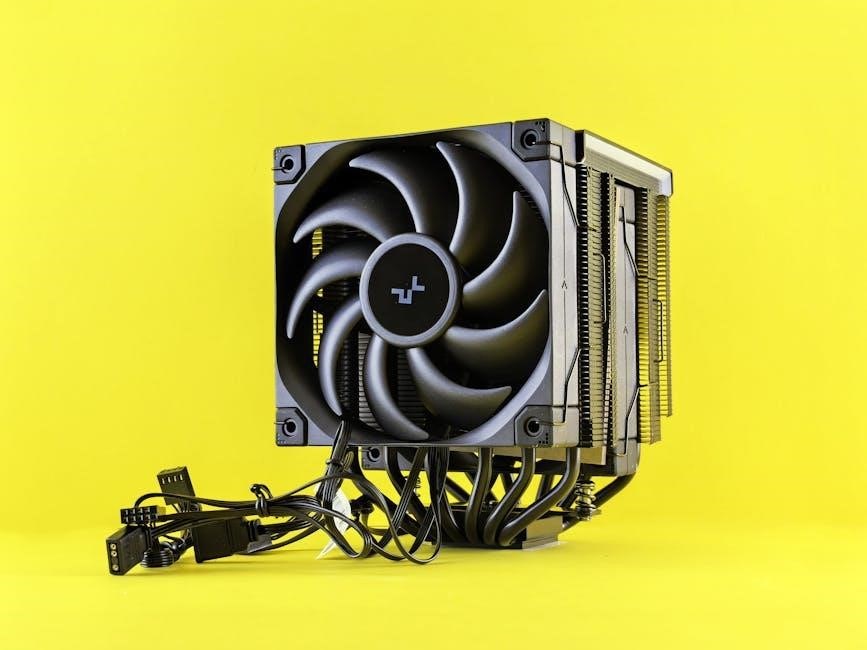
This conversion helps determine electrical load and ensures your circuit can handle the cooler’s power demands. It’s important to note these are approximate values; actual wattage can vary by manufacturer and model efficiency. Considering wattage alongside BTU/h allows for informed decisions regarding energy consumption and operating costs.
Portable vs. Whole-House Evaporative Coolers
Choosing between portable and whole-house evaporative coolers depends on cooling needs and space. Portable units are ideal for cooling single rooms, with sizing based on square footage – for example, two 6,200 BTU units for a crew area. Whole-house systems, however, require a more complex sizing approach, considering the entire home’s layout and airflow.
Portable coolers offer flexibility and lower upfront costs, while whole-house systems provide consistent cooling throughout the entire dwelling. Sizing portable units is relatively straightforward, but whole-house systems necessitate professional assessment for optimal performance and efficiency. Consider your budget, cooling requirements, and installation capabilities when making your decision.
Sizing Portable Units for Specific Rooms
Accurate sizing of portable evaporative coolers is crucial for effective room cooling. Begin by calculating the room’s square footage and referencing BTU charts. For instance, a crew area might require two 6,200 BTU units at 230V AC. A saloon could benefit from a combination – one 18,000 BTU, one 12,500 BTU, and two 9,200 BTU units, also at 230V AC.
Remember to add extra BTUs for factors like significant sunlight exposure or poor insulation. Consider the room’s typical occupancy; more people generate more heat; Utilize BTU charts that detail cooling capacity (Btu/h) alongside wattage conversions (e.g., 9000 BTU = 2638W). Proper sizing ensures efficient operation and prevents the unit from running constantly.
Whole-House System Sizing: A More Complex Approach
Sizing a whole-house evaporative cooler demands a more detailed assessment than portable unit selection. It’s not simply a matter of total square footage; factors like home layout, insulation quality, window area, and climate all play significant roles. A professional HVAC load calculation is highly recommended.
Consider the entire home’s heat gain, including appliances and lighting. Account for the number of occupants and their activity levels. Furthermore, proper fresh air intake is vital; pipe size requirements depend on the number of compressors. Optimizing airflow throughout the house is essential for even cooling distribution. Accurate sizing prevents system strain and ensures long-term efficiency and comfort.
Fresh Air Intake and Ventilation Requirements
Adequate fresh air intake is crucial for evaporative cooler performance and indoor air quality. These systems rely on a constant supply of outside air to function effectively, providing cooling through evaporation. Insufficient fresh air reduces cooling capacity and can lead to stale, humid conditions.
The required fresh air pipe size is directly related to the number of compressors within the system. Minimum pipe sizes vary; for example, a system with a single compressor requires a smaller diameter than one with multiple units. Proper ventilation ensures a continuous exchange of air, preventing moisture buildup and maintaining a comfortable indoor environment. Consult manufacturer specifications for precise requirements.
Fresh Air Pipe Size Requirements Based on Compressor Number
Determining the correct fresh air pipe size is directly linked to the evaporative cooler’s compressor count. More compressors necessitate larger diameter pipes to deliver sufficient airflow for optimal cooling. A single compressor system typically requires a minimum pipe size, while systems with multiple compressors demand significantly increased capacity.
For instance, charts indicate specific requirements: a system with 23x23x27-1/2 inch dimensions and a single compressor might need a smaller pipe than a 24x31x36 inch unit. Accurate sizing prevents airflow restriction, ensuring the cooler operates efficiently. Ignoring these guidelines can lead to reduced cooling performance and potential system strain. Always refer to the manufacturer’s specifications for precise details.
Optimizing Airflow for Maximum Cooling
Achieving peak evaporative cooling relies heavily on maximizing airflow throughout the system and the cooled space. Proper ductwork design, unobstructed vents, and strategic cooler placement are crucial. Ensure return air pathways aren’t blocked by furniture or other obstructions, allowing for consistent air circulation.
Consider the cooler’s intake and exhaust locations; fresh air should enter from a shaded area, while exhaust vents should be positioned to avoid recirculation. Regularly inspect and clean cooling pads to maintain optimal evaporation. Utilizing fans to supplement airflow can further enhance cooling, particularly in larger rooms. A well-optimized airflow system translates directly into improved efficiency and comfort.
Evaporative Cooler Features and Efficiency
Modern evaporative coolers boast features impacting efficiency, including water tank capacity and pump performance. Larger tanks reduce refill frequency, while robust pumps ensure consistent water distribution across cooling pads. Look for models with multiple fan speeds for customized airflow control and energy savings.
Consider units with automatic humidity controls, adjusting operation based on ambient conditions. Efficient pad materials maximize water absorption and evaporation rates. Some coolers integrate smart features like timers and remote control. Evaluating these features alongside BTU ratings helps determine the overall value and long-term operating costs of an evaporative cooler, ensuring optimal performance and user convenience.
Water Tank Capacity and Refill Frequency
Water tank capacity directly influences how often an evaporative cooler needs refilling. Smaller tanks (under 5 gallons) may require daily refills, especially in hot, dry climates with continuous operation. Larger tanks, exceeding 10 gallons, can provide several days of cooling before needing attention.
Refill frequency also depends on fan speed and cooler settings; higher speeds consume water faster. Some models feature low-water indicators or automatic shut-off features to prevent pump damage. Consider a cooler with a larger tank if convenient, uninterrupted cooling is a priority, or if manual refills are difficult. Evaluating tank size alongside climate and usage patterns is crucial for optimal performance.
Pump Capacity and Water Distribution
The pump’s capacity is vital for efficient water distribution across the cooling pads. A properly sized pump ensures even wetting, maximizing evaporative cooling. Insufficient pump capacity leads to dry spots, reducing effectiveness, while excessive capacity can cause water wastage and potential damage.
Pump capacity is often measured in gallons per hour (GPH) and should align with the cooler’s pad size and water flow requirements. Consistent water distribution is key; look for coolers with pumps designed for uniform coverage. Regular pump maintenance, including cleaning filters, prevents clogs and ensures optimal performance. A reliable pump is fundamental to achieving the cooler’s rated cooling capacity.
Troubleshooting Sizing Issues
Identifying sizing problems is crucial for optimal performance. A cooler running constantly, even on low settings, often indicates undersizing – the unit struggles to maintain the desired temperature. Conversely, short cycling (frequent on/off) might suggest oversizing, wasting energy and potentially reducing dehumidification.
Insufficient cooling despite proper operation points to a sizing mismatch or external factors like poor insulation. Check for air leaks, ensure adequate ventilation, and verify the BTU rating matches the room’s needs. Consider adding supplemental cooling if necessary. Addressing these issues ensures efficient and comfortable cooling, preventing strain on the unit and maximizing its lifespan.
Cooler Running Constantly: Potential Undersizing
A continuously running evaporative cooler is a strong indicator of insufficient capacity. The unit is working tirelessly, unable to reach the set temperature and maintain it, suggesting it’s too small for the space. This constant operation strains the motor and pump, shortening the cooler’s lifespan and increasing energy consumption.
Several factors contribute to this. Underestimated square footage, inadequate insulation, excessive sunlight, or a high occupant load can all overwhelm a smaller unit. Before assuming a malfunction, re-evaluate the room’s cooling demands. Consider upgrading to a higher BTU model to achieve comfortable and efficient cooling, preventing constant runtime and ensuring long-term reliability.
Insufficient Cooling: Identifying the Problem
When an evaporative cooler fails to deliver adequate cooling, a systematic approach to troubleshooting is crucial. Begin by verifying proper airflow – ensure vents aren’t blocked and the fan operates at the correct speed. Check the water level and pad saturation; dry pads drastically reduce efficiency. Inspect for leaks or obstructions in the water distribution system.
If these basic checks don’t resolve the issue, consider if the unit is undersized for the space, especially given insulation quality and sunlight exposure. A clogged filter or a failing pump can also limit performance. Finally, assess humidity levels; evaporative coolers struggle in already humid climates. Addressing these points will pinpoint the cause and restore optimal cooling.