Boat trailer guides are essential for safe and efficient watercraft transport‚ offering solutions for storage and launching needs. These guides simplify the process‚ ensuring a delightful boating experience for all enthusiasts.
The Importance of Safe Boat Towing
Safe boat towing is paramount‚ extending beyond simply attaching a trailer; it’s a commitment to road safety and protecting your investment. Improper towing can lead to accidents‚ causing damage to your boat‚ vehicle‚ and potentially endangering lives. Understanding weight limits‚ hitch classifications‚ and proper securing techniques are crucial elements.
Regular trailer inspections‚ including tire pressure checks and bearing maintenance‚ are vital preventative measures. A malfunctioning trailer component can quickly escalate into a hazardous situation. Furthermore‚ familiarizing yourself with launching and retrieval strategies minimizes risks at boat ramps. Prioritizing safety ensures enjoyable boating experiences‚ safeguarding both your vessel and fellow travelers on the road. Remember‚ responsible towing is a cornerstone of boat ownership.
Overview of Boat Trailer Types
Boat trailers come in diverse designs‚ catering to various vessel sizes and weights. Single-axle trailers are ideal for smaller boats‚ offering simplicity and ease of maneuverability. Dual-axle trailers provide enhanced stability and weight distribution for medium-sized boats‚ improving handling and braking performance. For larger‚ heavier boats‚ triple-axle trailers are often necessary‚ maximizing weight capacity and ensuring a secure tow.
Beyond axle configuration‚ trailers differ in frame construction – aluminum for lightweight corrosion resistance‚ or steel for robust durability. Specialized trailers exist for specific boat types‚ like pontoon or jet ski trailers. Selecting the appropriate trailer is crucial‚ matching its capacity to your boat’s specifications for safe and efficient transport.
Understanding Trailer Hitches
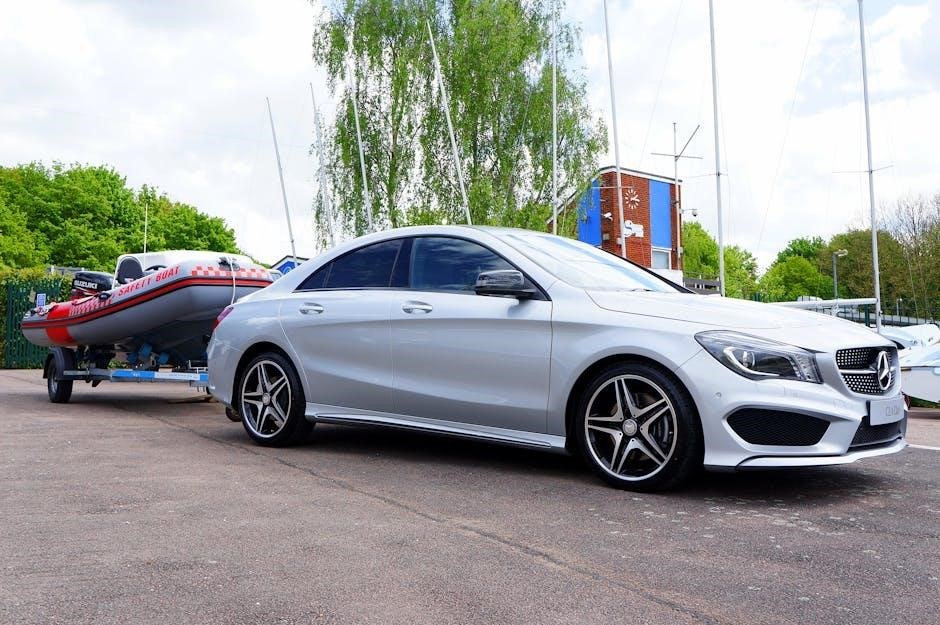
Trailer hitches are vital connections‚ enabling safe towing of boats. They transfer weight and force to the towing vehicle‚ ensuring stability and control during transport.
Hitch Classifications: A Detailed Breakdown
Hitch classifications are determined by their weight-carrying capacity‚ crucial for matching the right hitch to your boat trailer. Class I hitches‚ rated up to 2‚000 lbs‚ suit smaller trailers and bike racks‚ not typically for boats. Class II hitches‚ handling up to 3‚500 lbs‚ are suitable for light-duty hauling like jet skis or smaller boats.
The most common choice‚ Class III hitches‚ manage up to 8‚000 lbs‚ accommodating a wide range of boats. For heavier loads‚ Class IV & V hitches are designed for heavy-duty towing‚ capable of handling livestock trailers‚ large boats‚ and even double trailers – Class 5 reaching up to 20‚000 lbs. Understanding these ratings ensures a safe and reliable towing experience‚ preventing strain on your vehicle and ensuring secure boat transport.
Class I Hitches: For Smaller Boats
Class I trailer hitches are the lightest-duty option‚ generally rated for a maximum Gross Trailer Weight (GTW) of 2‚000 pounds and a Tongue Weight (TW) of 200 pounds. These hitches are primarily designed for light towing needs and are often used for small utility trailers‚ bike racks‚ or very small boats – think canoes or very compact fishing boats.
They typically feature a 1 ¼-inch receiver opening and are relatively easy to install on many vehicles. However‚ due to their limited capacity‚ Class I hitches are not suitable for most powerboats or larger vessels. Choosing a Class I hitch requires careful consideration of your boat’s weight to ensure safe and legal towing practices. Always verify your vehicle’s towing capacity before selecting this class.
Class II Hitches: Light-Duty Hauling
Class II trailer hitches represent a step up in towing capacity from Class I‚ typically handling up to 3‚500 pounds of Gross Trailer Weight (GTW) and 350 pounds of Tongue Weight (TW). These hitches are a good choice for light-duty hauling‚ making them suitable for jet skis‚ small aluminum boats‚ or single-axle trailers. They commonly feature a 1 ¼-inch receiver opening‚ offering a balance between capability and ease of installation.
While more versatile than Class I‚ it’s crucial to confirm your vehicle’s towing limits and the actual weight of your boat and trailer. Exceeding the hitch’s or vehicle’s capacity can compromise safety and potentially lead to damage. Class II hitches are a popular option for boaters with smaller‚ lighter watercraft seeking a reliable towing solution.
Class III Hitches: The Most Common Choice
Class III trailer hitches are arguably the most popular option for boat owners‚ striking a balance between affordability‚ capability‚ and versatility. These hitches generally support a maximum Gross Trailer Weight (GTW) of up to 8‚000 pounds and a Tongue Weight (TW) of 800 pounds‚ making them suitable for a wide range of boats – from medium-sized fishing boats to larger recreational vessels. They typically feature a 2-inch receiver opening‚ providing compatibility with a broader selection of towing accessories.
Their widespread availability and relatively straightforward installation contribute to their popularity. However‚ always verify your vehicle’s towing capacity and ensure the hitch is properly installed for optimal safety and performance. Class III hitches offer a robust solution for many boating enthusiasts.
Class IV & V Hitches: Heavy-Duty Towing
Class IV and V trailer hitches represent the pinnacle of towing capacity‚ designed for substantial loads like large boats‚ livestock trailers‚ and heavy equipment. Class IV hitches typically handle up to 10‚000 pounds GTW with a 1‚000-pound TW‚ while Class V hitches can exceed 17‚000 pounds GTW and 1‚700 pounds TW‚ and even reach 20‚000 pounds. These usually feature a 2-inch or 2-5/16-inch receiver opening.
Investing in these hitches is crucial for owners of substantial watercraft. They demand robust vehicle frames and may necessitate upgrades like weight distribution systems. Proper installation and adherence to weight limits are paramount for safe towing. While more expensive‚ Class IV & V hitches provide the necessary strength and stability for confidently hauling heavier boat trailers.
Types of Hitches: Ball Mounts & Beyond
Beyond the standard ball-and-coupler hitch‚ several options cater to diverse boating needs. The common setup utilizes a metal ball‚ typically 2 or 2-5/16 inches‚ attached to a drawbar‚ securely connecting to the trailer coupler. Weight distribution hitches are vital for larger boats‚ redistributing trailer weight for improved stability and control‚ preventing sway and enhancing braking.
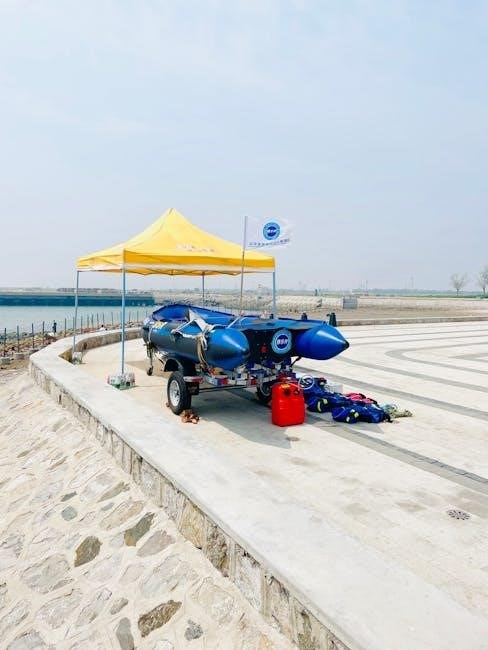
For those with exceptionally large boats‚ gooseneck hitches offer superior strength and maneuverability. These connect directly to a truck bed’s puck system‚ providing a stable and secure towing experience. Choosing the right hitch depends on boat size‚ weight‚ and vehicle capabilities. Understanding these variations ensures a safe and efficient towing setup.
Standard Ball-and-Coupler Hitch
The standard ball-and-coupler hitch remains the most prevalent choice for boat trailers‚ prized for its simplicity and affordability. This system employs a metal ball‚ commonly sized at either 2 or 2-5/16 inches‚ securely mounted to the vehicle’s receiver hitch. The trailer coupler‚ designed to fit snugly over the ball‚ creates a robust connection.
Proper ball size matching is crucial for safety; mismatching can lead to detachment. These hitches are suitable for a wide range of boat sizes and weights‚ making them versatile. Regular inspection of the ball and coupler for wear and tear is essential. Ensuring a tight fit with a locking pin completes the secure connection‚ providing peace of mind during transport.
Weight Distribution Hitches
Weight distribution hitches are invaluable when towing heavier boats‚ mitigating issues caused by uneven weight distribution. These systems redistribute trailer weight from the rear axle to all vehicle axles‚ improving stability and control. They accomplish this using spring bars that transfer weight forward‚ reducing rear-end sag and sway.
This results in a smoother‚ safer towing experience‚ particularly beneficial for larger vessels. Proper adjustment is critical; incorrect settings can negate the benefits. Weight distribution hitches often require specialized installation and setup. They are a significant investment but offer enhanced handling and reduced stress on the tow vehicle‚ extending its lifespan and improving overall safety.
Gooseneck Hitches (For Larger Boats)
Gooseneck hitches represent a robust towing solution specifically designed for exceptionally large boats and substantial trailer weights. Unlike traditional ball hitches‚ a gooseneck utilizes a fixed ball mounted in the bed of the truck‚ offering superior stability and maneuverability. This configuration minimizes trailer sway and provides a more controlled towing experience‚ crucial when navigating long distances or challenging terrains.

These hitches are commonly favored for hauling livestock trailers‚ but their strength and stability make them ideal for sizable watercraft. Installation requires modifying the truck bed‚ and they typically have higher weight capacities than other hitch types. Gooseneck hitches are a premium option for boat owners prioritizing safety and control when towing very heavy loads.

Essential Trailer Components
Essential trailer components‚ including the frame‚ axles‚ lights‚ and winch‚ work together to ensure safe boat transport and launching‚ maximizing boating enjoyment.
Trailer Frame and Construction
The trailer frame is the foundational element‚ dictating the overall strength and durability of the entire system. Typically constructed from steel‚ frames can vary in design – from fully welded options offering superior rigidity to bolt-together assemblies providing easier repair access.
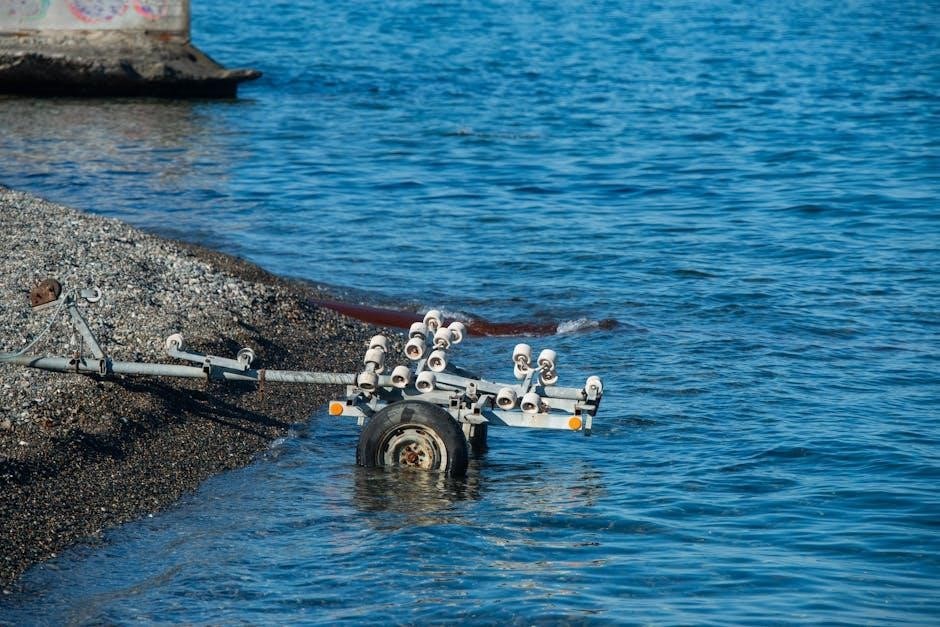
Galvanized steel is a popular choice due to its excellent corrosion resistance‚ crucial for trailers frequently exposed to water and salt. Frame construction directly impacts the trailer’s weight capacity; heavier boats necessitate robust‚ reinforced frames.
Consider the frame’s shape and support structure. Longitudinal members (the main rails) and crossmembers work in tandem to distribute the boat’s weight evenly. Proper frame design minimizes stress points and prevents bending or twisting during transport. Inspecting the frame for cracks‚ rust‚ or damage is paramount for safety.
Axles‚ Suspension‚ and Tires
Axles are critical components‚ supporting the trailer’s weight and ensuring smooth rolling. Boat trailers commonly utilize torsion axles‚ known for their independent suspension and compact design‚ providing a comfortable ride and enhanced stability. Leaf spring suspensions are also used‚ particularly for heavier loads.
Suspension systems absorb road shocks‚ protecting both the boat and the trailer from damage. Regular inspection of leaf springs for wear and tear‚ and torsion arms for proper function‚ is vital.
Tires must be appropriately rated for the trailer’s load capacity and regularly checked for pressure and tread wear. Marine tires‚ designed for corrosion resistance‚ are recommended. Proper tire inflation is crucial for safe towing and preventing blowouts. Always consider speed ratings when selecting tires.
Lights and Electrical Systems
Trailer lights are paramount for safety‚ ensuring visibility during towing‚ especially at night or in inclement weather. Standard lighting includes tail lights‚ brake lights‚ and turn signals‚ all synchronized with the towing vehicle. Submersible LED lights are highly recommended for boat trailers due to their durability and resistance to water damage;
The electrical system connects the trailer lights to the vehicle’s electrical system via a connector – typically a four- or seven-pin connector. Regularly inspect the connector for corrosion and ensure a secure connection.
Wiring harnesses should be checked for damage‚ and ground connections verified for proper function. Consider using dielectric grease to protect connections from corrosion. A functioning electrical system is non-negotiable for legal and safe towing practices.
Winch Systems for Boat Loading
Winch systems are crucial for safely loading and securing boats onto trailers‚ particularly for larger vessels. These systems utilize a hand-operated or electric winch‚ a strong cable‚ and a bow eye on the boat. Proper winch operation minimizes the risk of damage to the boat or trailer during loading and transport.
Regularly inspect the winch cable for fraying‚ kinks‚ or corrosion. Lubricate the cable periodically to ensure smooth operation. The winch stand should be securely mounted to the trailer frame‚ and the winch itself should be in good working order.
Always engage the winch lock or safety strap to prevent accidental unwinding during transit; Understanding your winch’s capacity and using it correctly is vital for a secure and stress-free boating experience.

Preparing Your Vehicle for Towing
Proper preparation is key for safe towing; knowing your vehicle’s limits‚ installing the correct hitch‚ and utilizing brake controllers are vital steps for boat owners.
Vehicle Towing Capacity: Knowing Your Limits
Understanding your vehicle’s towing capacity is paramount before embarking on any boating adventure. Exceeding these limits compromises safety and can cause significant damage to your vehicle. Consult your owner’s manual or the manufacturer’s website to determine the maximum weight your vehicle can safely tow.
This capacity isn’t a single number; it often varies based on factors like engine size‚ drivetrain‚ and axle ratio. Remember to consider not just the boat’s weight‚ but also the weight of the trailer itself‚ fuel‚ gear‚ and passengers.
Gross Vehicle Weight Rating (GVWR) and Gross Combined Weight Rating (GCWR) are crucial terms. GVWR is the maximum permissible weight of your vehicle and everything in it‚ while GCWR is the maximum allowable weight of your vehicle and trailer combined. Staying within these ratings ensures a stable and controlled towing experience‚ protecting both you and others on the road.
Brake Controllers: Enhancing Stopping Power
When towing a boat‚ especially larger ones‚ a brake controller is a non-negotiable safety feature. Your vehicle’s brakes alone may be insufficient to safely stop the combined weight of the truck and trailer. A brake controller allows you to independently activate the trailer’s brakes‚ synchronizing stopping power for controlled deceleration.
There are two main types: proportional and time-delayed. Proportional controllers apply braking force in direct relation to the vehicle’s braking‚ offering smooth and intuitive control. Time-delayed controllers apply a set amount of braking force after a short delay‚ suitable for certain trailer types.
Proper installation and adjustment are critical. Ensure the controller is compatible with your vehicle and trailer’s electrical system. Regularly test the controller’s functionality to confirm it’s operating correctly‚ providing the necessary stopping power for safe boating adventures.
Proper Hitch Installation
Correct hitch installation is paramount for safe boat towing. A poorly installed hitch can detach during transit‚ leading to catastrophic consequences. It’s strongly recommended to have a qualified professional install your hitch‚ ensuring all connections are secure and meet manufacturer specifications.
This includes verifying the correct hitch class for your vehicle and trailer weight‚ properly torquing all bolts‚ and ensuring the electrical connections for lights and brakes are functioning flawlessly. Double-check that the hitch receiver is level and aligned with the vehicle’s frame.
Regularly inspect the hitch for signs of wear or damage. A visual check before each trip can identify loose bolts or corrosion‚ preventing potential failures. Prioritize safety by investing in professional installation and consistent maintenance.

Launching and Retrieving Your Boat
Successfully launching and retrieving your boat requires careful maneuvering and technique‚ ensuring a smooth process and preventing damage to your vessel or trailer.
Safe Launching Techniques
Prior to launching‚ thoroughly inspect the launch ramp for any obstructions or hazards. Back the trailer slowly and carefully down the ramp‚ monitoring your surroundings and ensuring adequate clearance. Disconnect the safety chains and electrical connection before fully submerging the trailer.
Utilize the winch system to gently lower the boat into the water‚ controlling the descent to prevent damage. Once afloat‚ secure the boat with lines to the dock or a designated tie-off point. Finally‚ stage the vehicle to a safe location away from the ramp to avoid obstructing other boaters. Remember‚ patience and a methodical approach are key to a successful and safe launch.
Always be mindful of wind and current conditions‚ adjusting your technique accordingly. Consider using trailer guides to help align the boat during the launch process‚ minimizing the risk of scraping or damage.
Effective Retrieval Strategies
Retrieving your boat requires a deliberate and controlled approach. Slowly back the trailer into the water‚ deep enough to align with the boat. Use the winch to begin pulling the boat onto the trailer‚ ensuring it’s centered and balanced; Maintain steady tension on the winch cable to prevent the boat from sliding back in.
Once the boat is securely on the trailer‚ begin slowly driving forward‚ gradually extracting the trailer from the water. Utilize trailer guides to assist in aligning the boat straight onto the trailer‚ preventing side-to-side movement. After fully retrieving the trailer‚ secure the boat with straps or tie-downs for safe transport.
Remember to disconnect the electrical connection and reconnect the safety chains before moving the vehicle. Always be aware of your surroundings and other boaters at the ramp.

Avoiding Common Launching/Retrieval Mistakes
Common mistakes during launching and retrieval can lead to damage or delays. Avoid backing too far into the water‚ potentially submerging vehicle components. Failing to disconnect safety chains before launching is a critical error. Neglecting to use trailer guides properly can result in misaligned boat loading.
During retrieval‚ avoid sudden braking‚ which can cause the boat to slide off the trailer. Forgetting to secure the boat with straps after loading is another frequent oversight. Rushing the process increases the risk of accidents and damage. Always double-check that all lights are functioning correctly before and after each use.
Careful planning and attention to detail are key to a smooth and safe experience‚ preventing costly repairs and frustration.

Maintenance and Safety Checks
Regular inspections of your boat trailer are vital for safety and longevity‚ encompassing tires‚ lights‚ bearings‚ and the frame itself for optimal performance.
Regular Trailer Inspections
Consistent trailer inspections are paramount for ensuring safe boating experiences and preventing costly repairs. A thorough check should be performed before each trip‚ and a more detailed inspection at least annually‚ or more frequently with heavy use. Begin by examining the trailer frame for any signs of rust‚ cracks‚ or bending – addressing these issues promptly prevents further damage.
Next‚ meticulously inspect the tires for wear‚ proper inflation‚ and any sidewall damage. Don’t forget to check the lug nuts for tightness! Scrutinize the lights – ensuring all bulbs function correctly‚ including brake lights‚ turn signals‚ and running lights. Verify the winch strap is in good condition‚ and the winch operates smoothly. Finally‚ examine the safety chains and straps‚ confirming they are secure and free from fraying.
Documenting these inspections can also be beneficial‚ creating a maintenance log to track repairs and identify potential issues before they escalate.
Bearing Maintenance
Proper bearing maintenance is crucial for smooth trailer operation and preventing catastrophic wheel failure. Boat trailer bearings are constantly exposed to water and stress‚ requiring regular attention. Annually‚ or after extended submersion‚ disassemble the hubs‚ inspect the bearings for pitting‚ corrosion‚ or excessive wear‚ and replace them if necessary;
Clean and repack the bearings with marine-grade grease‚ ensuring complete coverage. Inspect the seals for damage and replace them alongside the bearings. Tighten the wheel bearings to the manufacturer’s specifications – too loose‚ and they’ll wear quickly; too tight‚ and they’ll overheat.
Consider using bearing buddies or a similar system to keep grease consistently applied and water out. Regular greasing extends bearing life and ensures safe towing. Ignoring bearing maintenance can lead to costly repairs and dangerous roadside breakdowns.
Tire Pressure and Condition
Maintaining correct tire pressure is paramount for trailer safety and tire longevity. Check tire pressure before each trip‚ and always when the tires are cold‚ using a reliable gauge. Refer to the tire sidewall for the maximum pressure rating‚ but adjust based on the trailer’s load. Underinflated tires generate excessive heat‚ increasing the risk of a blowout.
Regularly inspect tires for signs of wear‚ such as uneven tread wear‚ sidewall cracking‚ or bulges. Replace tires with sufficient tread depth and no visible damage. Consider the age of the tires; even with good tread‚ tires over six years old should be replaced due to rubber degradation.
Ensure all tires on the trailer are matched in size and type. Proper tire maintenance contributes significantly to a safe and trouble-free towing experience.